
When a dental clinic talks about “digital planning,” what does that actually mean for you? At OG Center, it brings together clinical assessment, imaging, intraoral scans and laboratory design. Each contributes a different piece of information; the dentist decides which records your case needs.
Understanding those roles can make the consultation easier to follow. You can ask what the team is looking at, how it affects the proposed treatment and what still needs to be confirmed in person.
CBCT: three-dimensional information about the jaw
Cone-beam computed tomography, or CBCT, uses X-rays to produce three-dimensional images. Dental implant planning is one of its clinical uses. It provides a different view from a conventional two-dimensional dental X-ray and can help answer questions about the structures being assessed. The FDA explains how dental CBCT works.
More imaging is not automatically better. The FDA recommends taking dental CBCT only when it is needed for diagnosis or treatment and considering existing images and suitable alternatives. CBCT typically involves more radiation than conventional dental X-rays. Ask why the examination is recommended and whether records you already have are useful.
OG Center uses Sirona CBCT technology. The useful conversation is not just which machine is available, but what clinical question the image is intended to answer in your case.
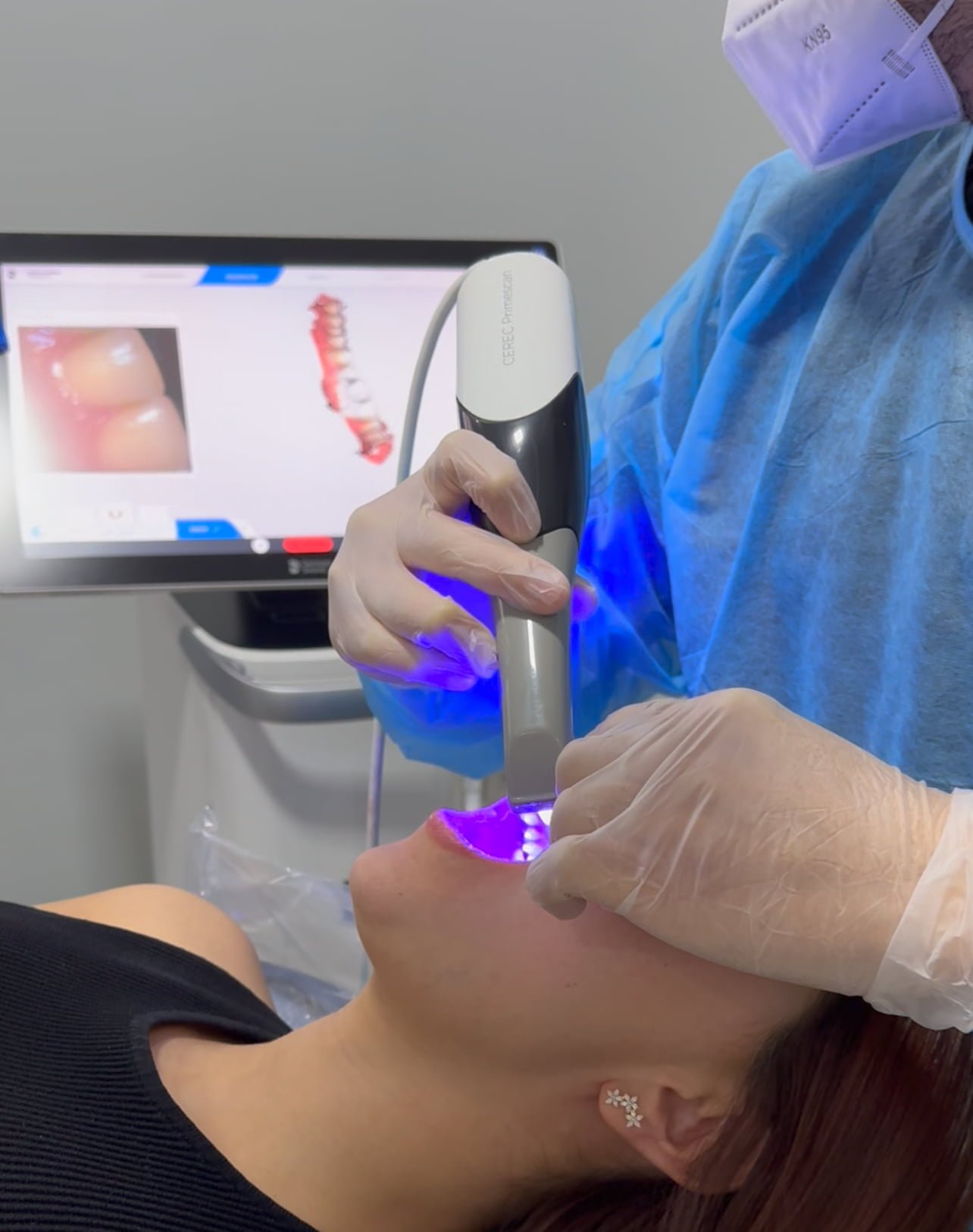
Primescan: a digital impression for the restorative workflow
An intraoral scan creates a digital record of the surfaces scanned in your mouth. Primescan, from Dentsply Sirona, supports digital impressions and the transfer of scan information into laboratory workflows. A model on screen can also help the team explain what it is reviewing. See the manufacturer’s Primescan overview.
A digital impression and a CBCT examination are different records. Ask your dentist to show you what each contributes rather than treating every “3D scan” as the same test.
Our own laboratory: from records to restoration design
OG Center’s in-house laboratory uses digital design, including Exocad, along with milling and 3D printing. This places the people planning your clinical care and the people creating your restoration within one coordinated workflow.
For a patient, that provides a concrete set of questions to ask: Who designs my restoration? When does the dentist review it? How are changes communicated to the laboratory? Which parts of the work will I have an opportunity to discuss?
Visit our clinic and laboratory page to see original photographs of the equipment and the team at work.
What the planning conversation can cover
- Your starting point: explain what you find difficult and what you hope treatment will change.
- The records: ask which images, scans or examinations are needed and why.
- The proposal: have the team explain the restoration, implant arrangement and alternatives in plain language.
- The sequence: identify the planned appointments, temporary stage and final restoration.
- The practical details: confirm costs, travel arrangements and follow-up in writing.
Ask whether a surgical guide forms part of your proposed plan, rather than assuming that “digital” means every case follows the same technique. Also ask what would happen if the findings during your assessment changed the preliminary proposal.
What can you prepare before traveling?
Start by telling the team what records you already have and when they were taken. Ask how to share them through the clinic’s recommended channel. Do not arrange new imaging solely for an online inquiry without clinical direction, and do not post medical records in public comments.
Bring a short list of questions about the parts of your quote you do not understand. Our guides to four versus six implants and zirconia terminology can help you prepare.
A digital workflow still needs a personal treatment plan
Technology describes tools, not a guaranteed outcome or a fixed completion date. Your written plan should explain how the proposed care applies to you, including its limitations and follow-up. Use the dental trip checklist to connect that plan with your travel arrangements.
Request an initial consultation with OG Center and ask the team to walk you through the information behind your recommendation.
General information for planning your visit. Your dentist's individual assessment and care instructions take priority.