
“Zirconia teeth,” “zirconia bridge” and “zirconia implants” can sound like the same treatment. They are not interchangeable terms. If you are comparing a full-arch package, ask which part of the treatment is made of zirconia and have the answer included in your written plan.
That distinction matters when you care about the appearance of your final teeth, want to compare materials or have a specific preference about the materials used in your body.
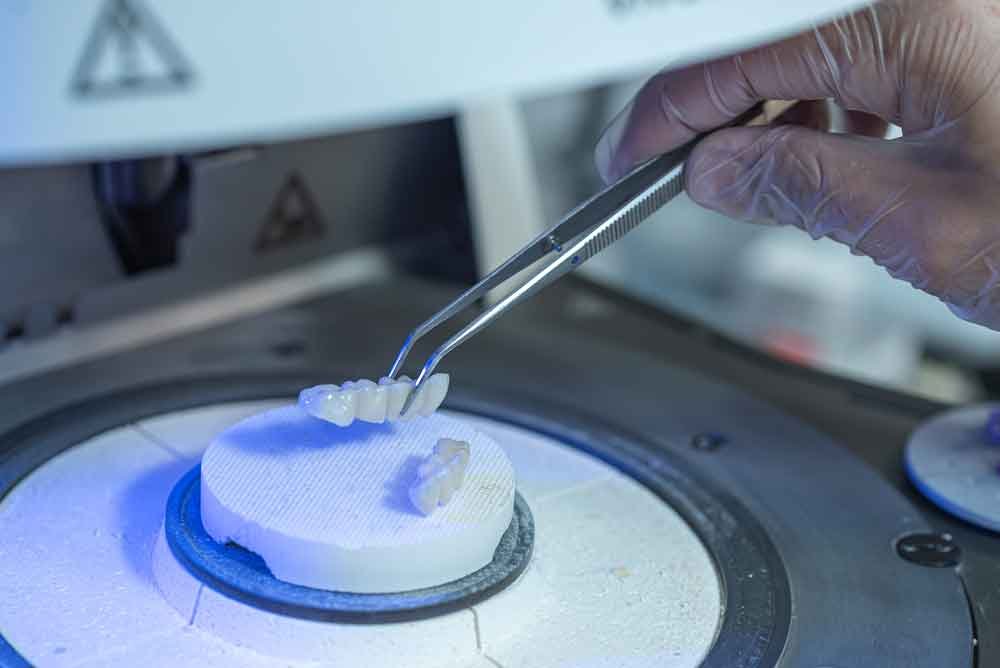
The implant and the replacement teeth have different roles
The FDA describes an implant system as an implant body placed in the jaw and an abutment that supports the artificial teeth, often with a connecting screw. The visible restoration is a separate part of the overall treatment. Implant systems commonly use titanium or zirconium oxide, among other materials. See the FDA’s explanation of dental implant components.
Think of your quotation as a component list. It should tell you what supports the restoration, how the parts connect and what the final teeth are made of. A material named in one line does not describe every component in the plan.
What does “final zirconia bridge” mean?
In OG Center’s All-on-4 offer, final full zirconia refers to the definitive bridge. The package separately names four Neodent by Straumann implants with original components. A zirconia bridge alone does not establish that the entire implant system is metal-free.
If a metal-free approach is one of your priorities, say so before comparing packages. Ask the clinician to identify the implant body, abutments, screws and any supporting structure, rather than assuming that the word “zirconia” covers them all.
What are zirconia implants?
Zirconia implants refer to the implant material itself. The International Team for Implantology describes zirconia as an oxide ceramic and identifies it as an alternative to titanium for selected indications. Its cited five-year evidence mainly concerns one-piece implants supporting single crowns or short bridges, with more limited evidence for two-piece designs. Those findings should not be read as a promise about every full-arch configuration. Read the ITI zirconia implant consensus.
A preference for a particular material is a useful starting point for a consultation. The next step is asking which options are appropriate for the restoration you need, which systems the team proposes and what evidence supports that specific approach.
Separate temporary teeth from final teeth
A quote should name both, even when they form part of one package. Ask which restoration you are expected to have when you leave after each visit and which appointment is intended for the final bridge.
For example, “temporary teeth included” and “temporary teeth plus final full zirconia included” describe different scopes. When comparing costs, mark that distinction before looking at the total. Our All-on-4 price guide lists the inclusions in OG Center’s published package.
Ask about the design as well as the material
During your discussion with the dentist and laboratory team, ask how you will review the proposed appearance and what information they need from you. Bring clear descriptions of your preferences—such as the shade and overall look you would like to discuss—without assuming that another person’s smile can simply be copied.
Useful questions include:
- What material and design are proposed for my final restoration?
- Which parts of my treatment are zirconia, and which use another material?
- What will the temporary restoration be, and when will the final bridge be reviewed?
- How will I learn to clean around the restoration?
- If an adjustment or repair is needed, where would it take place and what costs could apply?
Keep the details for future care
The FDA advises patients to keep the implant system’s brand and model information and to follow cleaning and review instructions. Ask for those details with your treatment records. They are especially useful when your care involves more than one location.
Explore OG Center’s in-house laboratory and our aftercare planning guide. When you are ready, ask the team to explain the materials in your own proposed treatment.
General information for planning your visit. Your dentist's individual assessment and care instructions take priority.